Properties, units & tenants
Record property and unit identifiers, occupancy, ownership references and tenant contacts. Keep a history of agreements rather than overwriting a tenant record when occupancy changes.

Property management CRM and rental operations software should connect the unit, the tenant and the financial record. Plan a clear workflow for agreements, rent schedules, maintenance requests and portfolio reporting.
Property Management CRM · Proposed workflow & solution scope
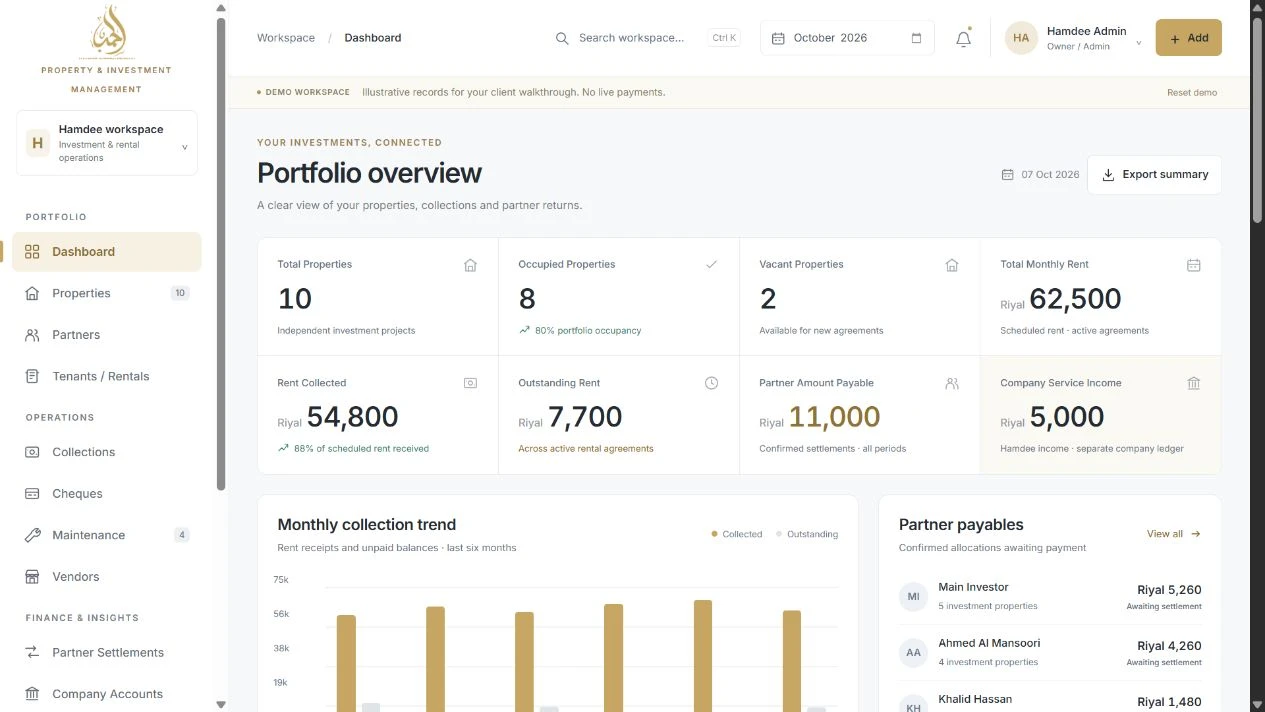
Lease dates, cheque records and maintenance conversations often sit in different files. That makes it difficult to explain an outstanding balance or distinguish a deposit from rental income. A useful operating record connects obligations and transactions without treating a scheduled payment as money received.
Renewal dates and collection follow-ups are missed.
Cheques, deposits and received rent are mixed together.
Maintenance costs cannot be traced back to a property or unit.
For property managers, landlords and portfolio teams coordinating residential or commercial units, tenant service and owner reporting.
Structure records from portfolio to property to unit, then link tenants and agreements. Establish how you manage owners, shared expenses, renewals and move-out settlements, including the jurisdiction-specific rules that need professional review.
Proposed solution scope: every feature below needs confirmation in a relevant demo and a written agreement.
Use these requirements to evaluate fit. Discuss the records, rules and exceptions behind each module.
Record property and unit identifiers, occupancy, ownership references and tenant contacts. Keep a history of agreements rather than overwriting a tenant record when occupancy changes.
Link contract periods, rent schedules and agreed terms to the correct unit. Assign renewal and expiry follow-ups so responsibility is clear before an agreement ends.
Separate scheduled rent, payment requests, cheque details and cleared receipts. Discuss post-dated cheque status, returned payments and reconciliation rather than marking rent paid when a cheque is merely received.
Keep deposits distinct from rent and document agreed deductions, inspections and refunds. Confirm applicable accounting and tenancy requirements before configuring the settlement process.
Log tenant requests, urgency, assignments, supplier work and completion evidence. Allocate expenses to the correct property or unit and distinguish owner costs from recoverable charges.
Review occupancy, rent due, collections, arrears, deposits and expenses with explicit definitions. Agree the reporting period and accounting source before producing owner statements.
A practical sequence to validate against your current process, including the exceptions your team handles every day.
Set up properties, units and authorized contacts with a consistent identification structure.
Link the tenant agreement, renewal dates, rent installments and deposit terms.
Reconcile receipts, follow up arrears and assign maintenance with supporting records.
Review the agreement, inspect the unit and reconcile deposits and outstanding obligations.
Review the source demo interface alongside the workflow your team needs. Agree the exact modules and exceptions before making a commitment.
These source demos use fictional records, sample currencies and simulated actions. They do not confirm production availability or universal feature support.
See a property investment and rental example with collections, cheques, maintenance and separate company accounts. All displayed balances are fictional.
Explore Hamdee International demoOpens Fusion Ventures’ public demo in a new tab. Production features, integrations and local requirements need confirmation.
Operational benefits to work toward, with the records and responsibilities to support them.
Agreement dates and commitments remain available after a unit is occupied.
A request has a unit, an owner and a record of what happened next.
Owner reviews can distinguish amounts due, cleared receipts and held deposits.
Discuss accounting exports, bank reconciliation formats and document storage using redacted examples. Payment gateways, banking connections, tenancy registries and cheque-processing integrations are not confirmed. Local compliance and data-access requirements need review for each market.
Discuss integrations & customizationManagers need unit details and maintenance follow-ups during inspections. Finance teams need detailed collection and expense views on desktop. Test role-based access, document readability and field connectivity; tenant portals and native mobile apps require separate confirmation.
Clear scope makes for a better decision.
Include cheque references, due dates and lifecycle states in scope. Receipt, deposit, clearance and return are different events. Confirm how the demonstrated workflow handles each and reconciles against your accounts.
Deposits should be tracked separately from rent, with inspection evidence and an approved settlement. Accounting and tenancy treatment varies by jurisdiction and must be reviewed with qualified local advisers.
This page focuses on ongoing unit, agreement, collection and maintenance operations. A brokerage pipeline has different lead, listing and transaction needs, which should be scoped separately.
Bring a redacted unit list, agreement, rent schedule, collection record, maintenance request and owner statement. Never share tenant identity documents for an initial enquiry.
Show us where the handoffs get difficult. We’ll discuss your requirements and confirm the right next step, including demo availability and a custom CRM quote.
No obligation. No assumed feature list. A practical conversation about your business.
WhatsApp Enquiry ayishamuneer4342@gmail.comContact Us